
GlytecOne – CMS and eCQM Compliance
The CMS Glycemic Mandate Is Here. The Joint Commission Is Aligned. GlytecOne Is How You Prepare.
CMS now requires hospitals to measure and report severe hypoglycemia (NQF #3503e) and severe hyperglycemia (NQF #3533e) as hospital harm electronic clinical quality measures (eCQMs).
The Joint Commission has aligned these same glycemic safety measures within its ORYX performance measurement requirements. Manual, high-risk glycemic workflows cannot produce the data quality, consistency, or performance levels these dual requirements demand. GlytecOne was built for exactly this challenge.
Measurement period began January 1, 2026
Days remaining in the 2026 measurement period.
Prepare for the 2026 CMS Mandate with Glytec’s Comprehensive CareKit
The Regulatory Landscape
Glycemic Harm Is Now a Reportable Event Across CMS and the Joint Commission
Severe hypoglycemia and severe hyperglycemia are now federally mandated hospital harm eCQMs under the CMS Hospital Inpatient Quality Reporting (IQR) Program, effective for the 2026 reporting period. The Joint Commission maintains close alignment with CMS on these measures through its ORYX program, meaning accredited hospitals face dual accountability to their payer and their accreditor on glycemic safety performance.
What was once an internal clinical concern is now a visible, measurable, and financially consequential organizational priority. Hospitals that do not act face compounding exposure: CMS reimbursement risk, Joint Commission survey scrutiny, and public transparency through quality scorecards.
What’s at Stake
What Hospitals Risk by Not Meeting CMS and Joint Commission Glycemic eCQM Requirements.
- Mandatory eCQM reporting is now in effect. Beginning with the 2026 reporting period, CMS requires hospitals to report the Hospital Harm Severe Hypoglycemia eCQM (NQF #3503e) and the Hospital Harm Severe Hyperglycemia eCQM (NQF #3533e) under the Hospital IQR Program.
- Financial consequences for non-compliance are real. Hospitals that do not report the mandated eCQMs risk forfeiting the full 2.6% annual Medicare reimbursement increase.
- The Joint Commission is aligned on the same metrics. Joint Commission-accredited hospitals reporting through the ORYX program will have their glycemic performance data reviewed during the accreditation and survey process.
- Performance gaps will be publicly reported. Glycemic control performance is increasingly visible on CMS Hospital Compare, Leapfrog Safety Grades, and other quality scorecards.
- Manual, retrospective reporting cannot meet the rigor these measures require. The eCQM specifications demand consistent, EHR-sourced data captured at the point of care.
- Clinical risk compounds the regulatory risk. Severe hyperglycemia and severe hypoglycemia are associated with increased in-hospital mortality, higher infection rates, and longer length of stay.
Understanding the Measures
What Do the CMS Glycemic eCQMs Actually Measure?

Hospital Harm: Severe Hypoglycemia (NQF #3503e)
This eCQM measures the proportion of inpatient hospital admissions for patients aged 18 and older in which a blood glucose value below 40 mg/dL is recorded within 24 hours of administration of insulin or another antihyperglycemic agent. CMS considers inpatient hypoglycemia a hospital-caused adverse drug effect and a direct indicator of the quality of glycemic care a hospital provides.

Hospital Harm: Severe Hyperglycemia (NQF #3533e)
This eCQM assesses the number of hospital days with a severe hyperglycemic event, defined as a blood glucose result greater than 300 mg/dL, or a day without a documented glucose value preceded by two consecutive days where at least one glucose value was 200 mg/dL or higher, per total qualifying hospital days.

Why both measures matter together
CMS and the Joint Commission recognize that glycemic management is a balancing act. The dual-measure structure intentionally requires hospitals to demonstrate that they can reduce severe hyperglycemia without creating iatrogenic harm from insulin-related hypoglycemia. Manual protocols and paper-based insulin orders cannot reliably achieve this balance at scale.
The Joint Commission Connection
How the Joint Commission Reinforces the CMS Glycemic Mandate
The Joint Commission and CMS have worked for over two decades to align hospital quality measures. Through its Pioneers in Quality program and ORYX performance measurement requirements, the Joint Commission has supported eCQM adoption across its accredited hospitals.
What this means for your hospital:
Dual reporting, dual accountability. Your glycemic performance is visible to both your accreditor and your federal payer.
Survey readiness requires current data. Joint Commission surveyors use organization-specific ORYX data during the accreditation survey process.
The 2026 ORYX requirements are streamlined but sharper. The measures that remain, including glycemic safety eCQMs, carry more weight in the survey and accreditation process.
eCQM adoption is now the expectation, not the exception. Hospitals that have not yet built eCQM infrastructure are falling behind.
GlytecOne Capabilities
CMS and Joint Commission Readiness Built Into Your Daily Operations

eCQM-Aligned Reporting and Performance Analytics
GlytecOne’s Performance Insights module generates regulatory-ready data exports aligned to the CMS Hospital Harm eCQMs. By helping to reduce manual chart abstraction, improve data accuracy, and produce auditable reporting outputs, Performance Insights supports your organization’s preparation for both CMS IQR submission requirements and Joint Commission ORYX performance review.

Consistent, Validated Data at the Source
Glucommander’s FDA-cleared, algorithm-based insulin dosing guidance produces consistent, auditable clinical data at the point of care. That consistency is the foundation of defensible eCQM reporting. When Joint Commission surveyors trace a patient through your glycemic management workflow, every dosing decision is documented, standardized, and traceable. Clinicians review and confirm all recommendations.

Current Visibility to Help Identify Patterns Before They Become Reportable Events
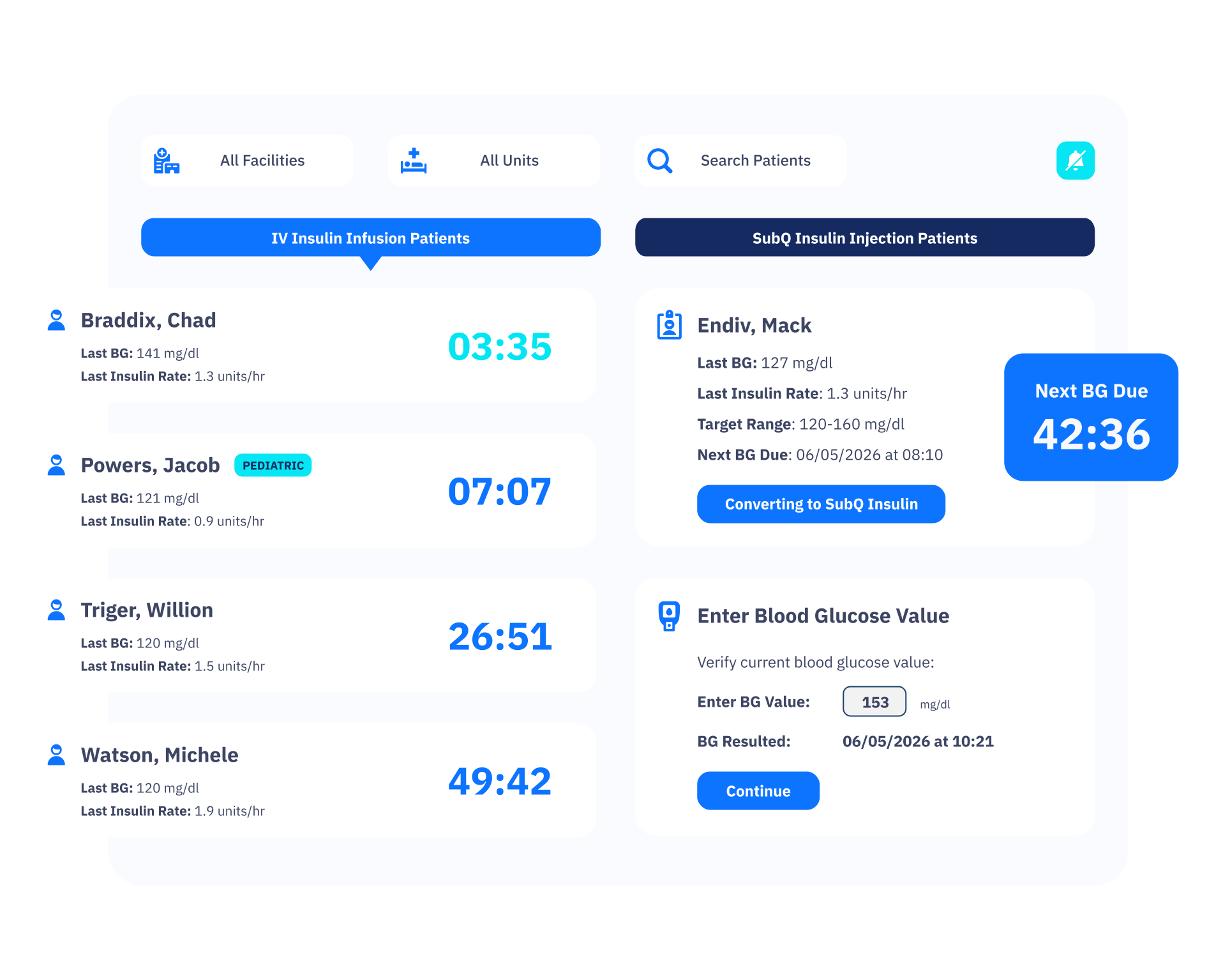
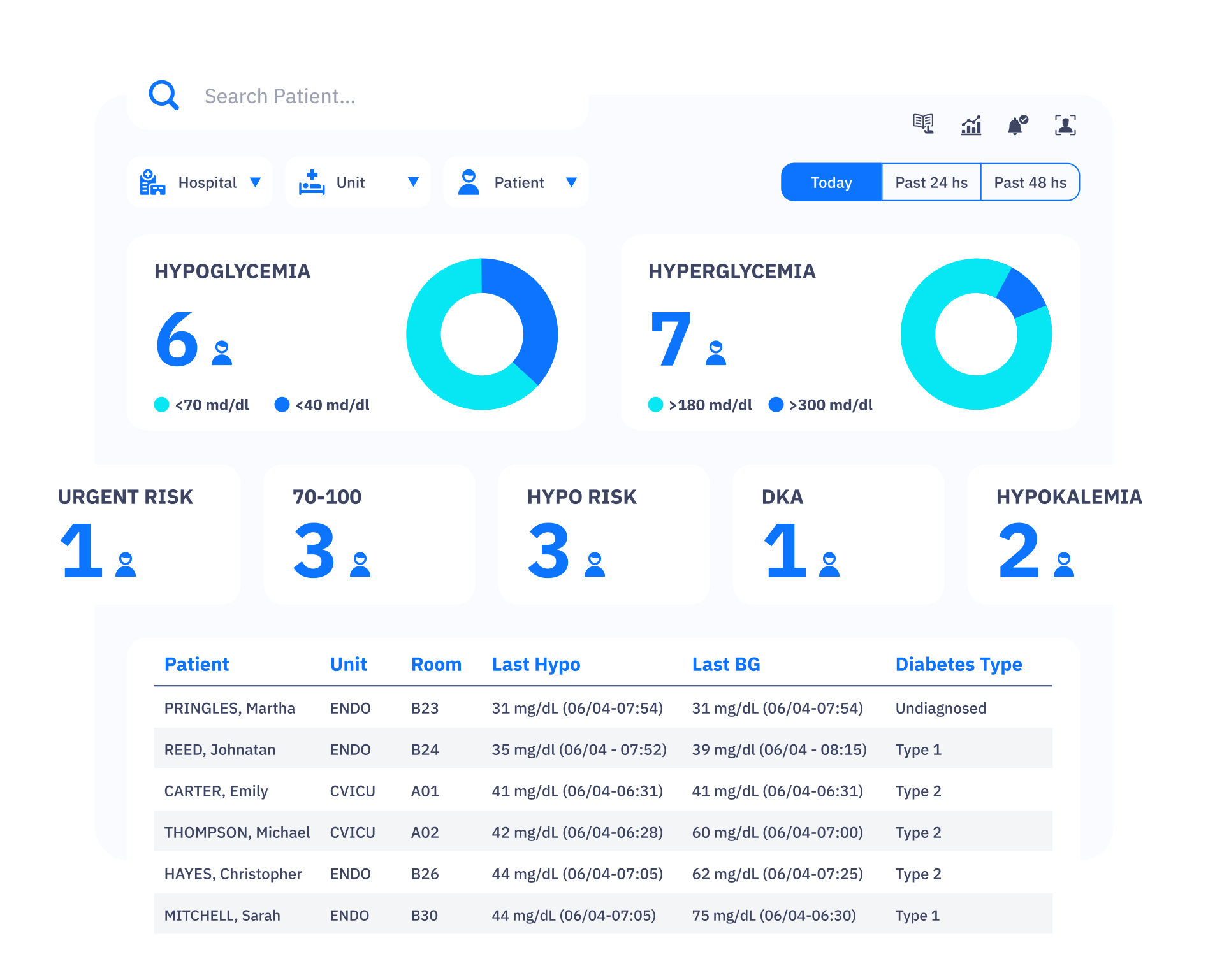
Performance Insights provides current visibility into glycemic patterns across your hospital system, by unit, by service line, by patient population. Quality and patient safety teams can review glycemic trends through predefined criteria and identify patients whose data patterns may warrant structured clinical review.

Protocol Compliance Documentation for CMS and Joint Commission Readiness
GlytecOne’s automated audit trails and documentation ensure every glycemic management decision is traceable, consistent, and defensible. This documentation supports Joint Commission survey readiness, CMS eCQM data integrity, and internal quality review processes.
Aligned with ADA, Endocrine Society, and Society of Hospital Medicine Guidelines
GlytecOne’s clinical protocols are standardized to align with the evidence-based guidelines of the American Diabetes Association, the Endocrine Society, and the Society of Hospital Medicine.
Outcomes That Support the Measures
Compliance readiness matters, but the real question hospitals face is: What will our numbers look like when they become public?
GlytecOne, trusted by more than 400 hospitals and supported by peer-reviewed clinical publications and 100+ patents, has demonstrated measurable results:
- Reduction in severe hypoglycemia events by up to 99.8%
- Shorter length of stay
- Fewer readmissions
- Improved time to glycemic target
FAQs
Frequently Asked Questions About the CMS Glycemic eCQM Mandate and Joint Commission Compliance.
What are the CMS glycemic eCQMs that hospitals must report in 2026?
CMS requires hospitals to report two hospital harm electronic clinical quality measures beginning with the 2026 reporting period: Hospital Harm Severe Hypoglycemia (NQF #3503e) and Hospital Harm Severe Hyperglycemia (NQF #3533e). Both measures apply to inpatient encounters for patients aged 18 and older.
What financial consequences do hospitals face for not reporting glycemic eCQMs?
Hospitals that do not report the mandated eCQMs under the Hospital Inpatient Quality Reporting (IQR) Program risk forfeiting the full 2.6% annual Medicare reimbursement increase.
Does the Joint Commission also require glycemic eCQM reporting?
The Joint Commission accepts the CMS-aligned severe hypoglycemia and severe hyperglycemia eCQMs as part of its ORYX performance measurement requirements. Joint Commission-accredited hospitals face accountability to both their accreditor and CMS on glycemic safety performance.
How does GlytecOne help hospitals prepare for the CMS glycemic eCQM mandate?
GlytecOne’s FDA-cleared Glucommander® platform provides algorithm-based insulin dosing guidance that produces consistent, auditable clinical data at the point of care. Clinicians review and confirm all recommendations. Its Performance Insights module generates regulatory-ready eCQM data exports, helping to reduce manual abstraction and improve data accuracy. GlytecOne has demonstrated up to 99.8% reduction in severe hypoglycemia events across its 400+ hospital partner network.
What is the difference between the hypoglycemia and hyperglycemia eCQMs?
The Severe Hypoglycemia eCQM (NQF #3503e) is a proportion measure that identifies the percentage of inpatient admissions with a blood glucose below 40 mg/dL following antihyperglycemic medication. The Severe Hyperglycemia eCQM (NQF #3533e) is a ratio measure that counts hospital days with specific glucose thresholds per total qualifying hospital days. Together, they measure whether a hospital can manage glycemic control without causing iatrogenic harm.
Are glycemic eCQM results publicly reported?
Yes. CMS publishes hospital quality data through its Hospital Compare platform, and glycemic control performance is increasingly visible through Leapfrog Safety Grades and other quality scorecards.
Can manual insulin protocols meet eCQM reporting requirements?
Manual, paper-based insulin protocols introduce variability, documentation gaps, and dosing errors that undermine both the clinical outcomes and the data integrity required for eCQM reporting. The American Diabetes Association strongly discourages reliance on protocols that do not dynamically adjust based on patient needs.
The Reporting Period Is Underway. Is Your Hospital Ready?
The 2026 CMS measurement period is active. Every quarter of unreported or underperforming glycemic data increases your hospital’s exposure, financially, operationally, and reputationally.
GlytecOne gives your hospital the clinical engine to help reduce severe hypoglycemia and hyperglycemia events, the data infrastructure to support CMS and Joint Commission reporting requirements, and the current visibility to manage glycemic safety as an ongoing operational priority.
Let’s Build Your CMS Readiness Plan
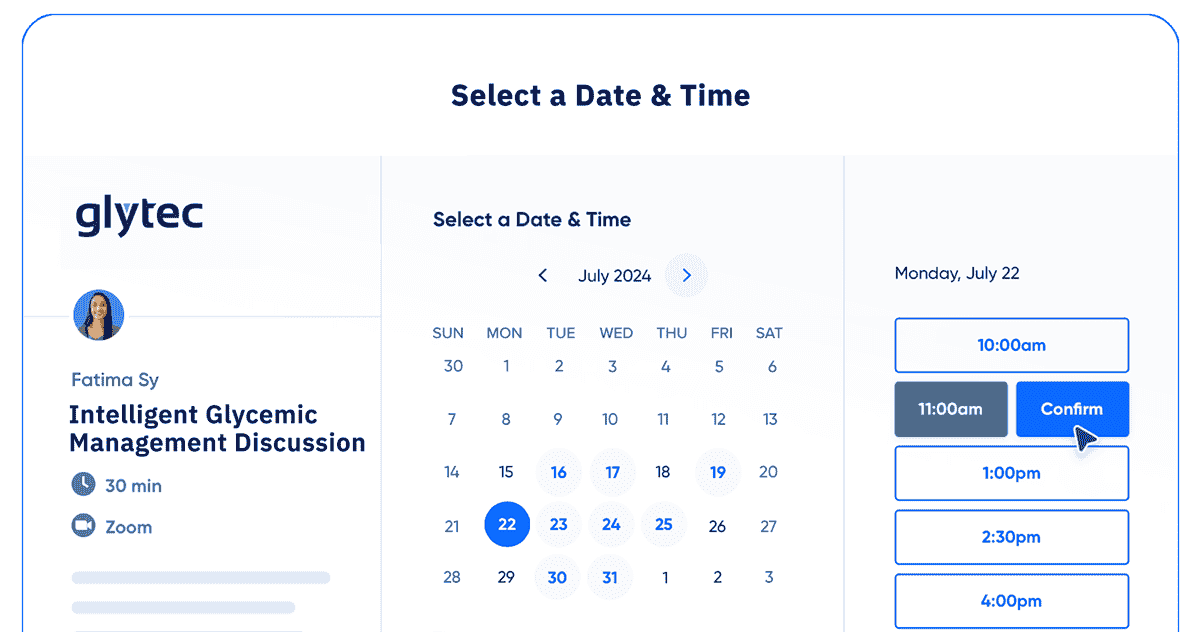
Want to Learn More about GlytecOne and our Intelligent Glycemic Management Platform?